


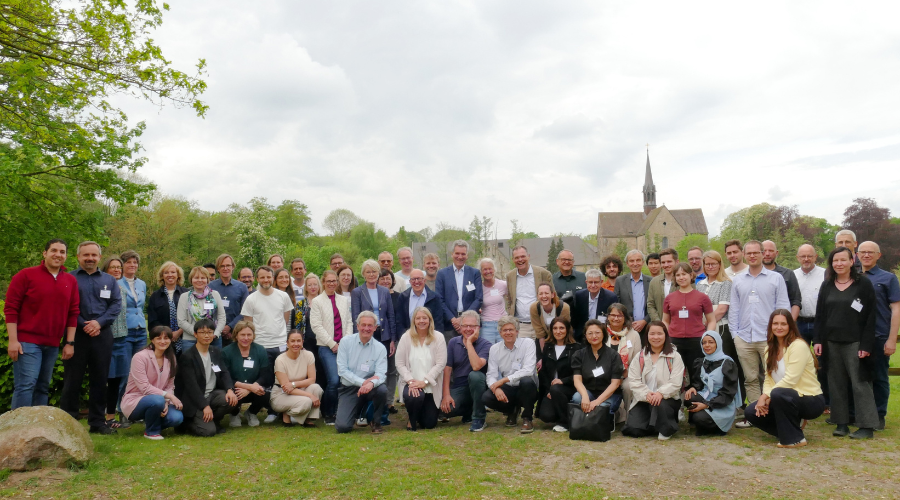
With the start of the new funding phase in early 2026, RESIST continues its scientific development and growth. As part of this transition, new highly qualified researchers have joined the cluster, while at the same time several members have left the network. To actively shape this transition and further strengthen collaboration, around 60 scientists, including the heads of the research groups, gathered for a joint retreat in Loccum on May 4 and 5, 2026.
The retreat focused on one clear objective: strategically initiating the next phase of the cluster, bringing everyone up to date, and creating new synergies through intensive exchange. Following a warm welcome by the cluster spokesperson, Prof. Dr. Reinhold Förster, an extensive program began. A total of 32 ongoing projects were presented, reflected upon, and discussed in 28 presentations. In addition to previous achievements, the discussions also focused on challenges and opportunities for future development. Particular emphasis was placed on looking beyond individual projects to identify potential connections that could enable even closer collaboration.
One of the highlights of the first day was the presentation by Prof. Dr.-Ing. Bodo Rosenhahn from the Institute of Information Processing at Leibniz University Hannover on the topic “AI in Medicine”. The subsequent discussion clearly demonstrated the strong interest in integrating artificial intelligence more deeply into RESIST research and highlighted the concrete approaches already being explored.
On the second day, the focus shifted to the RESIST cohorts. Through detailed presentations and open discussion rounds, participants exchanged views on the current status, future developments, and new methodological approaches. Strategic questions were also addressed: Which technologies should receive greater attention in the future? How can new researchers be integrated most effectively, and how can collaborations be further expanded?
In addition, important initiatives within the cluster were presented and further developed, including “YOUNG RESIST”, which supports early-career researchers, as well as plans to strengthen international networking and intensify national collaborations. The growing importance of artificial intelligence in medicine once again played a central role.
“The retreat was a successful, constructive, and inspiring start to the new funding phase”, summarized Prof. Förster.
Despite the already close connections within RESIST—many projects are interdisciplinary and bring together researchers from different institutions—the meeting provided a valuable opportunity to deepen existing contacts and establish new ones. For the new members in particular, the retreat proved to be an excellent introduction to the network.