
Marina

About Marina

This author has not yet filled in any details.
So far Marina has created 36 blog entries.

New publication in Gut Microbes: Vital Research Group investigates the role of SIgA and the gut microbiota following pediatric organ transplantation

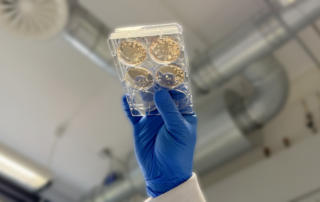
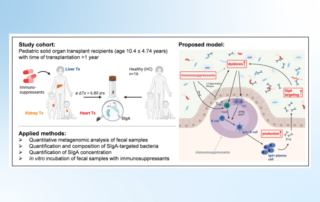
The research team led by RESIST member PD Dr. Marius Vital at Hannover Medical School has published new findings on long-term alterations of the gut microbiota in pediatric solid organ transplant recipients. The study, entitled “Altered SIgA-targeting of gut microbiota is associated with long-term dysbiosis in pediatric solid organ transplant recipients,” has recently been published in the renowned journal Gut Microbes (Impact Factor 11). In addition to the Vital Research Group, clinicians from the pediatric departments of Hannover Medical School contributed to the study. The researchers compared stool samples from 48 children and adolescents who had undergone heart, kidney, or [...]
2026-06-12T10:01:39+02:00 12. June 2026|

RESIST Retreat Marks the Launch of a Strong Second Funding Phase

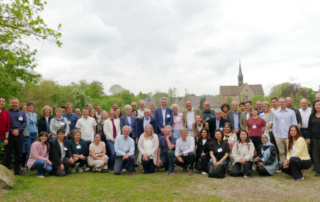
With the start of the new funding phase in early 2026, RESIST continues its scientific development and growth. As part of this transition, new highly qualified researchers have joined the cluster, while at the same time several members have left the network. To actively shape this transition and further strengthen collaboration, around 60 scientists, including the heads of the research groups, gathered for a joint retreat in Loccum on May 4 and 5, 2026. The retreat focused on one clear objective: strategically initiating the next phase of the cluster, bringing everyone up to date, and creating new synergies through [...]

2026-06-02T14:22:56+02:00 21. May 2026|

Welcome: PD Dr. Marius Vital

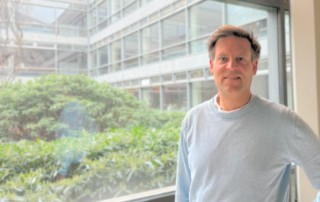
Since the beginning of 2026, PD Dr. Marius Vital has strengthened the RESIST research consortium with his expertise in functional microbiome research. He heads the “Functional Microbiomics” research group at the Institute of Medical Microbiology and Hospital Epidemiology at Hannover Medical School (MHH), where he also serves as co-head of molecular diagnostics. His research focuses on understanding how the human microbiome contributes to the development and progression of diseases. His group employs advanced multi-omics approaches such as metagenomics, metatranscriptomics, and metabolomics to identify novel biomarkers and develop innovative, personalized therapeutic strategies, including targeted nutritional interventions. A particular emphasis is [...]

2026-06-12T09:47:50+02:00 18. May 2026|

Genetic “bonus material” makes the gut bacterium Segatella copri oxygen-tolerant

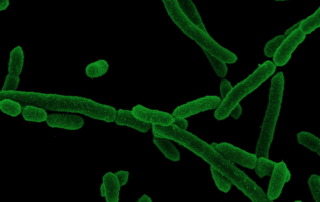
Researchers at the Helmholtz Centre for Infection Research have discovered new functional differences in the widespread gut bacterium Segatella copri. As the team reports in a recent study, some strains possess additional genetic material that makes them significantly more tolerant to oxygen. The findings were published in the journal Cell Host and Microbe. The study focuses on the molecular regulator OxyR, which controls the bacterial response to oxygen. Strains of Segatella copri carrying OxyR survived exposure to oxygen far better than strains lacking this regulator. Using extensive genome analyses, the researchers also found that OxyR-containing strains are particularly common [...]

2026-06-12T09:50:24+02:00 11. May 2026|

Maternity Leave and Re-Entry in Research: RESIST Supports Female Scientists at Every Stage

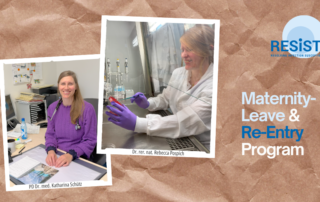
With its “Maternity Leave” and “Re-Entry” programs, RESIST provides targeted support for female researchers striving to balance pregnancy, family life, and demanding scientific work. Two examples from dermatology and pediatric pulmonology illustrate how this support makes a tangible difference. Continuity in the Laboratory: Support for Dr. Rebecca Pospich Dr. rer. nat. Rebecca Pospich conducts research at the Department of Dermatology, Allergy and Venereology under the supervision of Prof. Dr. Thomas Werfel and PD Dr. Lennart Rösner. Her scientific focus lies in the investigation of patient samples from atopic dermatitis and cutaneous T-cell lymphoma. Her work regularly involves bacterial pathogens [...]

2026-05-21T11:32:23+02:00 7. May 2026|

Virology Team “Infectious Pace” Completes Marathon in Hanover

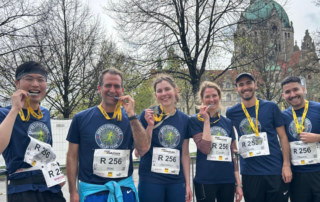
A team from the Institute of Virology delivered a strong team performance at this year’s marathon in Hanover: competing under the name “Infectious Pace,” Lucas Mendes Monteiro, Josi Schenk, Carolin Vogt, Santiago Álvarez Cárdenas, Abel Viejo-Borbolla, and Xiangming Han completed the race together in 4 hours, 10 minutes, and 43 seconds. All team members are affiliated with the Institute of Virology and work on various aspects of viral infections. Lucas Mendes Monteiro and Josi Schenk are PhD students of RESIST member Prof. Dr. Abel Viejo-Borbolla and focus on varicella-zoster virus (VZV), studying immune modulation and cellular metabolism. Carolin Vogt [...]

2026-06-12T09:54:54+02:00 30. April 2026|

New Representatives Elected for YOUNG RESIST: Dr. Stephan Traidl and Isabel Klefenz Strengthen Early-Career Network

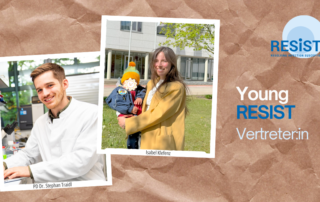
The RESIST Cluster of Excellence has elected two new representatives for the YOUNG RESIST committee: PD Dr. Stephan Traidl will take on the role of postdoc representative, while Isabel Klefenz will represent the interests of doctoral students. Both bring not only solid scientific expertise but also a strong commitment to networking and interdisciplinary collaboration. Stephan Traidl studied medicine at Hannover Medical School (MHH) and received support during his studies through several scholarships, including the German National Academic Foundation and the Hannover Biomedical Research School (HBRS). International stays in Switzerland, the United Kingdom, and the United States, particularly in the [...]

2026-05-07T13:12:40+02:00 30. April 2026|

Cell factory for the immune system: MHH researchers are developing bioreactors to produce millions of human immune cells. The method opens up opportunities for research and therapy.

Researchers at Hannover Medical School (MHH) have developed a method for efficiently producing human immune cells, such as macrophages, in medium-sized bioreactors. The immune cells can be derived from induced pluripotent stem cells and are important for disease research as well as for new therapeutic approaches. The method has now been published in the journal Nature Protocols. Macrophages—also known as “scavenger cells”—play a central role in the human immune system. They are indispensable for defending against pathogens and for repairing damaged tissue. Furthermore, they are already being used in clinical therapy, for example in the treatment of liver diseases. [...]

2026-05-07T11:37:27+02:00 28. April 2026|

Welcome: Prof. Dr. Anna-Maria Dittrich

Since the beginning of RESIST’s second funding phase in early 2026, Prof. Dr. Anna-Maria Dittrich has joined the research consortium. She is Professor of Translational Pediatric Pneumology at Hannover Medical School and a senior physician in Pediatric Pneumology and Allergology. In addition, she heads the Pediatric Cystic Fibrosis Center and serves as co-director of the Christiane Herzog Center for Cystic Fibrosis. Prof. Dittrich’s research focuses on cystic fibrosis, particularly on immunological and inflammatory processes as well as infections, which she investigates, among other methods, using metagenomic analyses. Within RESIST, she studies how host genetic risk factors and the pathogenicity [...]

2026-04-22T12:20:25+02:00 22. April 2026|

Towards a Functional Cure for Hepatitis B: Together Hannover-based research makes important contributions to infectious disease medicine

A recent study from Hannover, conducted within the framework of the Excellence Cluster RESIST, provides important insights for understanding and the future treatment of chronic hepatitis B. Researchers from Hannover Medical School (MHH), the Helmholtz Centre for Infection Research (HZI), TWINCORE, and the Centre for Individualised Infection Medicine (CiiM), a joint institution of HZI and MHH and a core component of RESIST, have demonstrated that a previously underappreciated group of immune cells, known as γδ T cells, plays a central role in controlling viral infection. The study was published in the journal Gut. γδ T cells are capable of [...]

2026-06-12T09:53:59+02:00 22. April 2026|
Go to Top