
Bettina

About Bettina

This author has not yet filled in any details.
So far Bettina has created 465 blog entries.

PhD and PostDoc: Representation elected

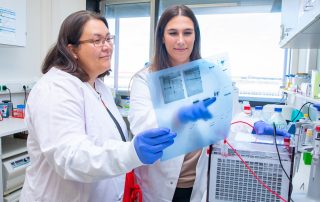
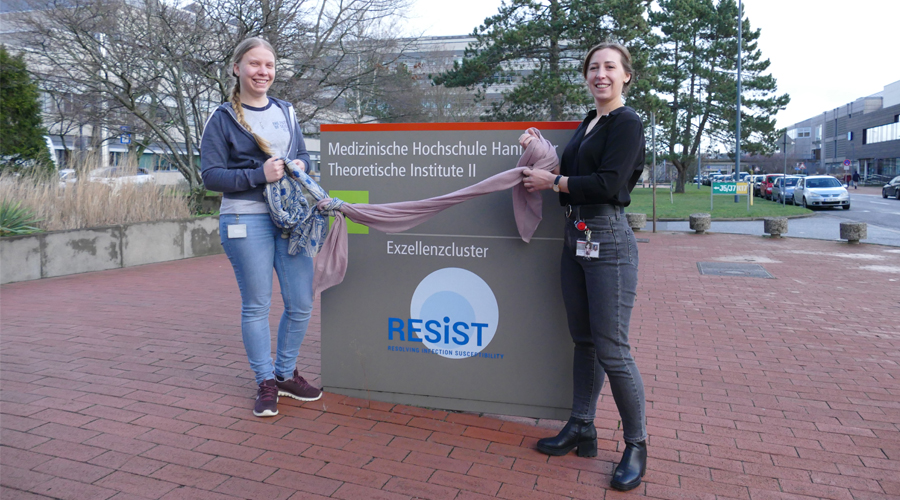
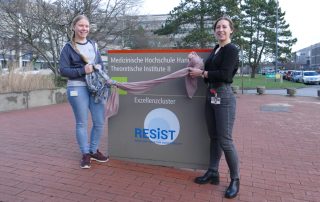
Today, RESIST (post-)doctoral students met and, among other things, elected their deputies: They are Dr. Carina Jürgens, MHH Clinic for Gastroenterology, Hepatology and Endocrinology, who has already represented PhD students in RESIST since January 2020, and Marie Schulze, who is currently doing her PhD at the MHH Institute of Virology. Congratulations and good luck with the new task! Dr. Carina Jürgens (on the second photo, left) and Marie Schulze want to ensure that good contacts can be made.
2023-02-13T13:30:53+01:00 15. December 2022|

The Winter Newsletter is published

We are very pleased to now present the Winter RESIST Newsletter. There you will find a greeting at the turn of the year from Prof. Schulz (page 1), an interview with our new patient representative Egbert Trowe (page 3), exciting research topics starting on page 6 and an invitation to Herrenhausen Castle from Prof. Förster and Prof. Brinkmann on page 12. We hope you enjoy reading this issue. Bettina Bandel Click here for the RESIST newsletter

2022-12-09T12:28:50+01:00 9. December 2022|

Developing new drugs with immune cells

Prof. Lachmann receives 2.5 million euros for Fraunhofer Attract Group: Prof. Lachmann is dedicated to alternative therapies against bacterial infections of the lower respiratory tract as part of his RESIST project. In particular, he is investigating the influence of macrophages on lower respiratory tract infections. His team has already succeeded in producing macrophages in scalable systems - i.e. from small scale in the laboratory to industrial use. The head of the research group at the MHH-Department of Paediatric Pneumology, Allergology and Neonatology also wants to use these standardised immune cells to test the effectiveness and safety of drugs. For [...]

2022-12-13T10:33:13+01:00 8. December 2022|

Infections with RS viruses

Fever, cold, cough, sore throat - many babies and small children are currently lying in bed with an infection. Often the trigger is the so-called respiratory syncytial virus (RSV), which is being researched in the RESIST project A1. The team of this project, led by Prof. Hansen and Prof. Pietschmann, is looking for factors in the genome that favour a severe disease and make it predictable. With reliable indications of a severe course of the disease, children could be immunised as a preventive measure. In the following interview, Dr. Martin Wetzke, senior physician at the MHH Clinic for Paediatric [...]

2022-12-08T12:00:16+01:00 8. December 2022|

Internal advisory board enriched

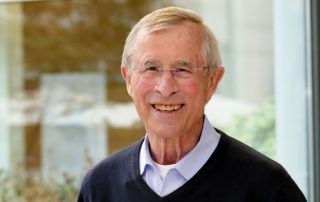
In addition to Gabriele Gründl, Egbert Trowe now also represents patients on the RESIST internal advisory board: Mr Trowe, you had a liver transplant in 2002 due to viral hepatitis. Since then, organ donation has been your topic and you are very active in numerous committees. In your opinion, what should be researched as a priority in this regard? Work should be done to avoid reinfection and to make immunosuppressants more tolerable, so that there are fewer side effects. But above all, I would like to see progress in curing the diseases. Then organ transplants would no longer be [...]

2022-11-28T09:23:44+01:00 28. November 2022|

How researchers breed phagocytes

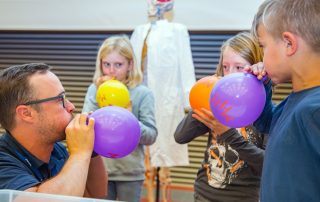
Around 200 girls and boys attended Prof. Lachmann's KinderUni lecture: The children waited a long time to be able to enter the largest lecture hall of the MHH again. After a two-year break due to Corona, the time had finally come on 8 November 2022: around 200 inquisitive girls and boys aged eight to twelve came to the university to experience the lecture by RESIST Prof. Lachmann on the topic of "Medicine of tomorrow: How can phagocytes from the laboratory heal us? The lung expert is researching how to help young people whose immune systems are weakened to better [...]

2022-11-21T16:00:13+01:00 21. November 2022|

A year in science

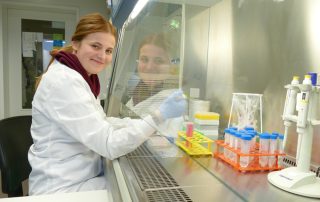
"During my voluntary year in science (FWJ), I get a good insight into research - both in the lab and in documentation. This makes it easier for me to think about whether I want to do this later," says Emelie Dechant. The 19-year-old started her FWJ at MHH in September 2022 in the team of RESIST researcher Prof. Viemann after graduating from Tellkampfschule. Emelie Dechant really likes her tasks. On the one hand, she collects samples from the paediatric clinic that come from premature babies – these are breast milk, blood, throat swabs and stool – and prepares them [...]

2022-11-21T14:43:58+01:00 21. November 2022|

RESIST researchers highly regarded

Prof. Manns, Prof. McHardy, Prof. Werfel and Prof. Osterhaus are among the most cited scientists in the world. This was the result of the latest analysis of scientific publications by the company Clarivate Analytics. The "Highly Cited Researchers" list, which is compiled annually, shows which publications in each discipline are among the one percent that have been cited the most. Prof. Osterhaus is listed in the "Microbiology" category and the three RESIST members Prof. McHardy, Prof. Werfel and Prof. Osterhaus in the "Cross-Field" category, which includes researchers who have an impact on science beyond their actual field of work. [...]

2022-11-29T15:19:31+01:00 16. November 2022|

SFB 900 Symposium 2022

The SFB 900 formed the basis for RESIST: On 13 and 14 October 2022, the final symposium of the Collaborative Research Centre 900 "Chronic Infections: Microbial Persistence and its Control" took place. The SFB 900 had started on 1 July 2010 and will come to an end on 31 December 2022 after 12½ years of funding by the German Research Foundation - it has thus reached the maximum possible funding period after two successful interim evaluations in 2014 and 2018 and a 6-month pandemic-related extension. SFB 900 is the first Collaborative Research Centre at the MHH to focus entirely [...]

2022-12-06T12:18:30+01:00 15. October 2022|

The role of the six variants

New research on the multiplication of adenoviruses: Inflammation of the gastrointestinal tract and conjunctiva, but also of the liver, brain, urinary tract and lungs – the list of diseases that an infection with human adenoviruses can cause is long. In addition, the viruses are common worldwide, these infections are becoming more frequent and can also become latent. Then they persist in the cells, temporarily have no detectable effect, but can reactivate again. In healthy adults, adenovirus infections usually proceed without symptoms or with mild symptoms. But in people with a weakened immune system, they can become life-threatening and not [...]

2022-12-06T12:20:23+01:00 13. October 2022|
Go to Top