


The research team led by RESIST member PD Dr. Marius Vital at Hannover Medical School has published new findings on long-term alterations of the gut microbiota in pediatric solid organ transplant recipients. The study, entitled “Altered SIgA-targeting of gut microbiota is associated with long-term dysbiosis in pediatric solid organ transplant recipients,” has recently been published in the renowned journal Gut Microbes (Impact Factor 11). In addition to the Vital Research Group, clinicians from the pediatric departments of Hannover Medical School contributed to the study.
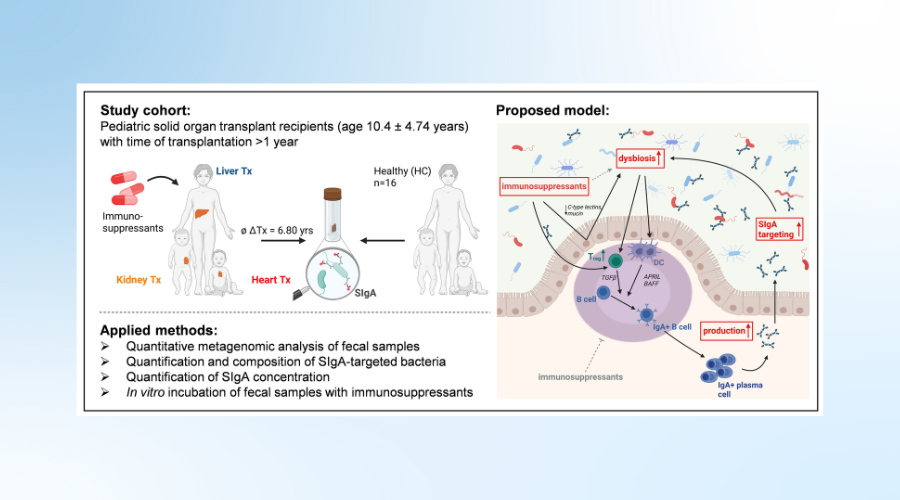
The researchers compared stool samples from 48 children and adolescents who had undergone heart, kidney, or liver transplantation with samples from healthy controls. Using quantitative metagenomics and SIgA sequencing, they demonstrated that the composition of the gut microbiota remains persistently altered and is closely linked to immune responses at the intestinal mucosa.
The results showed that transplant recipients exhibited elevated concentrations of secretory immunoglobulin A (SIgA) and that both the proportion and the spectrum of SIgA-bound gut bacteria differed markedly from those observed in healthy children. These altered SIgA responses were strongly associated with the extent of microbial dysbiosis and were additionally linked to higher levels of the immunosuppressive drug tacrolimus.
The study provides the first evidence that long-term dysbiosis of the gut microbiota following organ transplantation may be largely mediated by alterations in SIgA-driven immune responses. These findings contribute to a better understanding of the interplay between mucosal immunity, the gut microbiota, and immunosuppressive medication, and open new perspectives for the development of microbiome-based therapeutic strategies.
Publication:
Altered SIgA-targeting of gut microbiota is associated with long-term dysbiosis in pediatric solid organ transplant recipients. DOI: https://doi.org/10.1080/19490976.2026.2675078