
Bettina

About Bettina

This author has not yet filled in any details.
So far Bettina has created 465 blog entries.

When the skin aches

Neurodermatitis and psoriasis - RESIST team explores location and type of immune cell activity: Many people suffer from neurodermatitis (atopic dermatitis) or psoriasis. These chronic inflammatory diseases, which have so far been incurable, can lead to a significant loss of quality of life due to the agonising itching and stigmatisation in severe forms. Researchers of RESIST have now gained a number of new insights with potential clinical relevance using state-of-the-art technologies such as T-cell receptor and single-cell RNA sequencing based on skin biopsies and blood samples from patients. They have published these in the journal Allergy, currently the leading [...]
2022-10-11T14:52:33+02:00 11. October 2022|

For the first time: RESIST Satellite Symposium

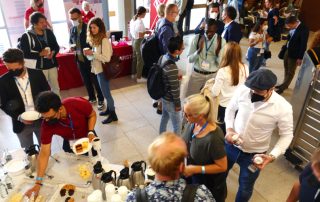
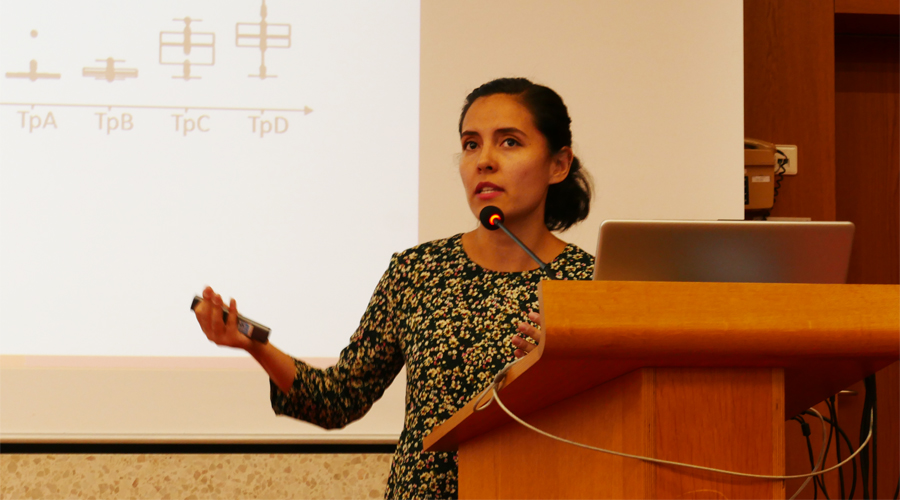
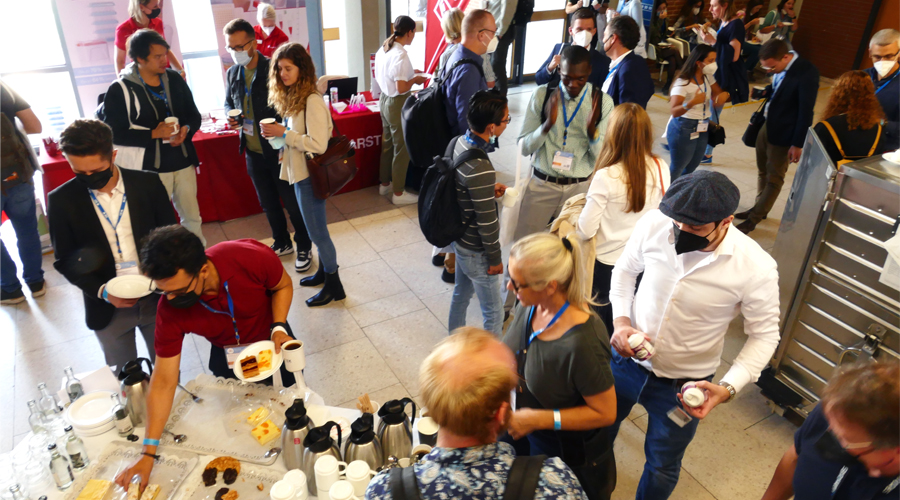
A RESIST satellite symposium was held for the first time - as part of the annual meeting of the German Society for Immunology (DGfl) and the Austrian Society for Allergology and Immunology (ÖGAI). Ten speakers enriched the guests' knowledge on the topics of SARS-CoV-2, therapeutic measures and systems immunology in the well-attended MHH lecture theatre H on 7 September. Prof. Pöhlmann from the German Primate Centre kicked things off with his lecture on SARS-CoV-2 variants. Dr. Bosnjak from the MHH Institute of Immunology then presented his work on the inhalable SARS-CoV-2 vaccine, colleague Dr. de Barros reported on immune [...]

2022-09-22T11:56:10+02:00 22. September 2022|

More safety for medicines

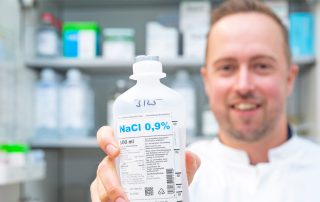
Professor Lachmann receives "ERC Proof of Concept Grant" to revolutionise drug safety / Novel immune cells to benefit millions of people Medicines that are injected must be continuously tested for impurities as part of their production and release, as these can cause fever or even blood poisoning. Until now, this has mostly been done using animal tests, animal products or the so-called monocyte activation test (MAT). But the use of animal tests and products must be avoided - also because they do not adequately reflect human physiology in some cases and because the European authorities will no longer accept [...]

2022-09-07T14:33:19+02:00 7. September 2022|

Research of antiviral agents

Team led by Prof. Pietschmann receives around 700,000 euros from the Volkswagen Stiftungfor RSV project: New approaches and new substances are needed in the fight against infectious diseases. This has been shown evidently by the coronavirus pandemic. In response to the emergence of SARS-CoV-2, the Volkswagen Stiftung has launched the funding initiative "Innovative Approaches in Antiviral Drug Development" back in 2020. Recently, the foundation has announced more then ten projects that will be funded with a total of 6.6 million euros. Prof. Pietschmann, Director of the Institute for Experimental Virology at TWINCORE and Professor for Experimental Virology at MHH, [...]

2022-09-07T16:04:30+02:00 6. September 2022|

The summer newsletter is here

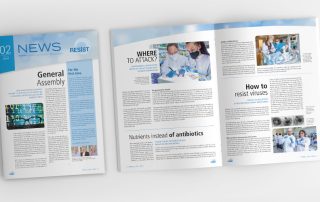
We are very pleased to now present the summer RESIST newsletter. Take a look at research that has something to do with blue boxing gloves (page 7), find out about the topic of monkeypox (page 5), learn more about new RESIST members whom we warmly welcome, for example our patient representative Gabriele Gründl (page 3). We hope you enjoy reading it. Your RESIST Newsletter editorial team Click here for the newsletter

2022-08-11T12:15:36+02:00 11. August 2022|

Revealed: A New Pathway

The Prof. Bosse group has revealed a novel exit pathway used by the Human Cytomegalovirus (HCMV) to spread infection in human cells. The research study, published in PLOS Pathogens, shows that HCMV can release new virus particles in bulk pulses. According to the researchers, this new exit pathway contributes to the diversity of HCM viral particles, which may explain the virus’s ability to infect different cell types. Viral infections begin when a virus penetrates a host cell and remodels the host cell’s apparatus to enable the creation of new viral particles. For infection to spread, these new viral particles [...]

2022-08-08T13:38:21+02:00 8. August 2022|

Welcome to RESIST

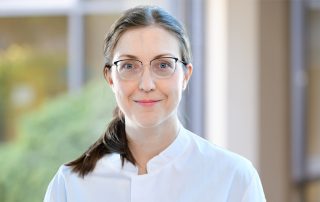
As a new member of RESIST we welcome Dr Helenie Kefalakes. Infection with the hepatitis D virus is rare, but it often becomes chronic and can lead to cirrhosis and liver cancer. But why does this infection not heal? This has not yet been sufficiently researched. It is suspected that the immune system plays an important role, but so far we have too little data. That is why Dr Helenie Kefalakes is researching within the framework of RESIST what role certain immune cells, so-called CD4+ T cells, play in controlling the virus. "We want to find out why they [...]

2022-08-01T14:11:08+02:00 1. August 2022|

World Hepatitis Day

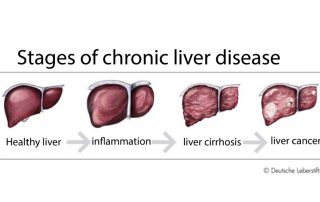
The RESIST team is researching liver inflammation in four projects : the search for a hepatitis C vaccine (project B10), new therapies for hepatitis B (project B8) and hepatitis D (Project B14) and hepatitis B vaccination (project B9).

2022-07-28T11:48:51+02:00 28. July 2022|

Gabriele Gründl is on the patient advisory board

Gabriele Gründl represents the patients We are very pleased that Gabriele Gründl has taken on the task of representing patients on the patient advisory board advisory board of RESIST. She is the national chairperson of the patient organisation Deutsche Selbsthilfe für angeborene Immundefekte (German Self-Help for Congenital Immunodeficiencies, dsai) and recipient of the Federal Cross of Merit on Ribbon. Ms Gründl, you have been advocating for people with congenital immunodeficiencies for more than three decades. What has changed for those affected by the Corona pandemic? Plasma donations, on which many affected people depend, have decreased - because fewer people [...]

2024-11-05T09:50:43+01:00 18. July 2022|

Welcome to RESIST

As a new member of RESIST we welcome Dr Benjamin Nilsson-Payant, scientist in the team of Prof Dr Thomas Pietschmann at the TWINCORE Institute for Experimental Virology. Dr Nilsson-Payant is particularly interested in how the flu-causing influenza A virus and other respiratory RNA viruses replicate their genomes. "RNA viruses use RNA polymerases for their replication, which are error-prone by nature, which is why faulty viral genomes are produced. I am interested in how these faulty genomes trigger the innate immune response," he says. To understand in detail the molecular mechanisms of viral replication and how viral-host interactions affect viral [...]

2022-07-07T10:44:24+02:00 7. July 2022|
Go to Top