


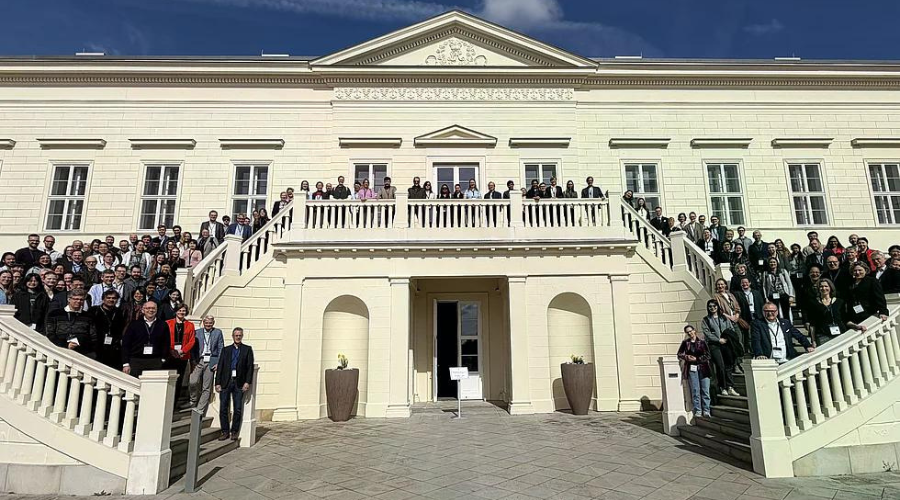
The Cluster of Excellence RESIST played a key scientific role at the 2nd International Conference on Individualised Infection Medicine in Hanover. The conference, held from March 19 to 21, 2026, at Herrenhausen Palace, brought together around 160 international experts from research and clinical practice to discuss new approaches to the prevention, diagnosis, and treatment of infectious diseases.
With its own scientific session, RESIST was prominently represented in the program, underlining its key role in researching infection resistance and developing innovative therapeutic strategies. Chaired by Prof. Dr. Kathrin de la Rosa, the session provided diverse insights into the cluster’s current research activities.
Highlights included contributions from leading RESIST researchers: Prof. Dr. Markus Cornberg highlighted the role of gamma delta T cells as emerging effectors in the immune response in chronic hepatitis B. Prof. Dr. Nataliya Di Donato presented the latest findings on the genomics of immune deficiencies, while Prof. Dr. Lars Dölken explored mechanisms of viral immune evasion using HSV-1 and influenza viruses as examples. In addition, Prof. Dr. Till Strowig demonstrated the importance of bacterial interactions in complex microbiomes.
These contributions clearly illustrated how RESIST deciphers fundamental mechanisms of resistance development and translates them into new therapeutic approaches. A particular focus was placed on linking molecular basic research with clinical application.
The broader conference program also reflected the dynamic nature of the field: opened by a welcome address from Lower Saxony’s Minister of Science Falko Mohrs and leading representatives of key institutions, it featured 28 scientific presentations, including seven keynotes, as well as numerous thematic sessions. Alongside international exchange, special emphasis was placed on promoting early-career researchers.
At the same time, it became evident how crucial the close integration of basic research, clinical expertise, and data-driven methods is for progress. The Centre for Individualised Infection Medicine (CiiM), jointly supported by MHH and HZI, pursues precisely this translational approach to accelerate the transfer of research into clinical practice. In close collaboration with RESIST and initiatives such as CAIMed, this creates new perspectives for more precise diagnostics and tailored therapies.
Overall, the conference demonstrated that individualized infection medicine cannot be realized without a deep understanding of resistance mechanisms. RESIST makes a decisive contribution in this area: by closely integrating research, clinical practice, and innovative methods, the cluster is driving forward the development of personalized strategies.
Full article on the conference available here.
Full program.
Photo: CiiM